ALL CATS–INCLUDING FERAL AND STRAY CATS–ARE PROTECTED UNDER Michigan Law
What is a Community Cat?
One of the millions of cats who live entirely outdoors. Many such cats receive some degree of care from people. Community cats can be divided into two basic categories: stray and feral and they often live in colonies. The common factor of all community cats is that they are unowned. Feeding or caring for community cats does not mean you own them. It means you are doing the humane thing to help our fellow creatures who are less fortunate. #TeamHumane
Why are there so many Cats (owned and homeless)? There are many factors that has led to this.
1. Irresponsible owner. Cats owners didn’t get their cats fixed. The cats escaped outside, were allowed to go outside or the owners’ abandonded them outside.
2. Previous versions of animal sheltering focused mainly on dogs. State and local laws were written to address dogs which led shelters to follow that focus. We still have “dog pounds” in existence today and they take in few, if any, cats. Many srares have laws that require spay/neuter prior to an animal being adopted. That has helped greatly keep the dog population under control. It has NOT helped cats.
3. Animal shelters recognized the cat population was growing and embarked on a trap and kill mission. They would catch/trap cats and then kill them – not euthanize them because that happens to relieve an animal’s suffering from medical issues or injuries. This practice has gone on for decades and still is done in many areas. The problem is – you will NEVER kill all the cats.
4. Cats reporduce more frequently than dogs. When an owned cat is abandoned to the streets, most are unfixed. It doesn’t take long to have the number of cats grow expeditiously!
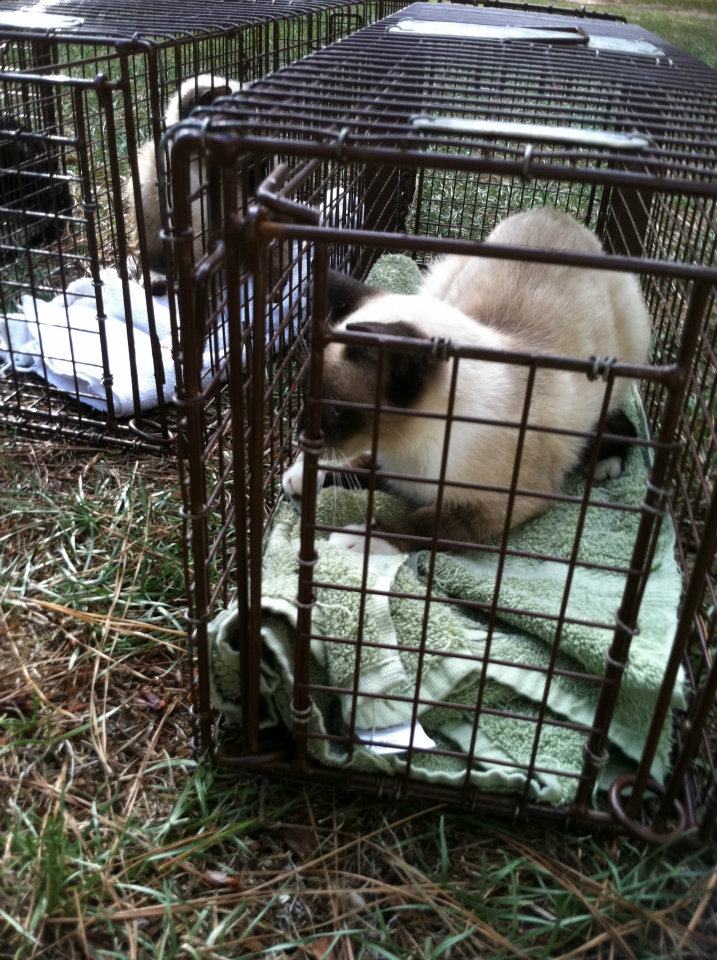
Trap-Neuter-Return (TNR) is the Only Method to Successfully and Humanely Reduce and Control Cat Populations! This approach involves humanely trapping the outside cat, having it fixed – which also includes a rabies vaccination and an ear-tip to easily see that this cat is fixed- and returning it to its outdoor home. TNR is practiced all over the world and is done mainly by smaller rescue/TNR groups and individuals. While some rescues may have a 501c3 IRS non-profit status making it a little easier to raise funds, much TNR is done by individuals who pay for the cost of spay/neuter out of their own pockets. Most times, there is a colony manager or caretaker that provides food, shelter, water and ongoing health care for the cats – again out of their own personal funds. TNR will have great success and cat overpopulation issues will humanely decline when we work together to make large, targeted TNR efforts!